

Over 60 percent of American households say clutter in the living room disrupts their relaxation time. As daily life becomes increasingly busy, finding smart solutions to manage living room chaos matters more than ever. This guide explores how storage boxes can bring order and style to your space, helping American families create a living room that feels calm, attractive, and truly functional.
Table of Contents
- Defining Storage Boxes For Living Rooms
- Popular Styles And Material Options
- Smart Organization And Placement Strategies
- Choosing The Right Box For Your Needs
- Common Mistakes And Safety Precautions
Key Takeaways
| Point | Details |
|---|---|
| Versatile Storage Solutions | Storage boxes serve both organizational and aesthetic purposes, enhancing room design while decluttering spaces. |
| Material Matters | Choosing the right material—fabric, wood, plastic—affects durability, style, and functionality, tailoring storage solutions to individual needs. |
| Strategic Placement | Thoughtful arrangement of storage boxes maximizes space and accessibility, creating a cohesive and visually appealing system. |
| Safety and Maintenance | Regular checks and thoughtful organization prevent safety hazards and ensure ongoing functionality of storage solutions in living areas. |
Defining Storage Boxes for Living Rooms
Storage boxes have become essential organizational tools that transform living room spaces from cluttered to streamlined. These versatile containers are not just simple storage solutions, but strategic design elements that help homeowners manage their living environments with precision and style. Practical storage solutions enable individuals to maximize available space while maintaining an aesthetically pleasing room layout.
Storage boxes are durable containers designed to house various household items, ranging from decorative accessories to everyday objects. They come in multiple sizes, materials, and designs, allowing homeowners to select options that seamlessly blend with their existing decor. Some storage boxes feature decorative exteriors that complement furniture, while others prioritize functionality with stackable or collapsible features. Maximizing space through intelligent storage means choosing containers that serve both practical and aesthetic purposes.
When considering storage boxes for living rooms, homeowners should evaluate several key characteristics. Material matters significantly - options range from fabric and canvas to wood, plastic, and woven materials. Each material offers distinct advantages: fabric boxes provide flexibility, wooden boxes add warmth, and plastic containers ensure durability. Size and shape are equally important, with rectangular boxes fitting more efficiently into shelving units and corner spaces. Look for features like removable lids, handles for easy transportation, and neutral color palettes that integrate smoothly with various interior design styles.
The ultimate goal of living room storage boxes extends beyond mere organization. These innovative containers help create visual harmony, reduce clutter, and provide smart solutions for managing items that might otherwise create visual chaos. By strategically selecting storage boxes that match your living room’s aesthetic and functional requirements, you transform storage from a mundane necessity into an elegant design element.
Popular Styles and Material Options
Storage boxes have evolved far beyond simple plastic containers, emerging as sophisticated design elements that reflect personal style and functional needs. Eco-friendly storage solutions now offer homeowners an array of materials that blend seamlessly with modern living room aesthetics. Natural materials like bamboo, linen, and rattan have gained significant popularity, providing both visual warmth and practical storage capabilities.
When exploring material options, homeowners can choose from diverse categories that cater to different design preferences and functional requirements. Fabric storage boxes offer softness and flexibility, with options ranging from canvas to linen that can be easily folded or collapsed when not in use. Wooden storage boxes bring a sense of classic elegance, often featuring intricate craftsmanship that doubles as decorative furniture pieces. Plastic containers, while more utilitarian, have also advanced in design, with sleek, modern profiles that can integrate smoothly into contemporary living spaces. Small space storage tips suggest selecting materials that complement existing furniture and color schemes.
Each material brings unique advantages to living room storage solutions. Woven materials like rattan provide a natural, textured look that adds visual interest, while metal wire frames offer industrial-chic appeal for more minimalist spaces. Leather and faux leather storage boxes introduce a touch of luxury, perfect for sophisticated living room designs. Consider factors like durability, maintenance requirements, and how well the material resists wear and tear. Some materials, like bamboo and linen, excel in lightweight design and easy cleaning, making them ideal for households seeking both style and practicality.
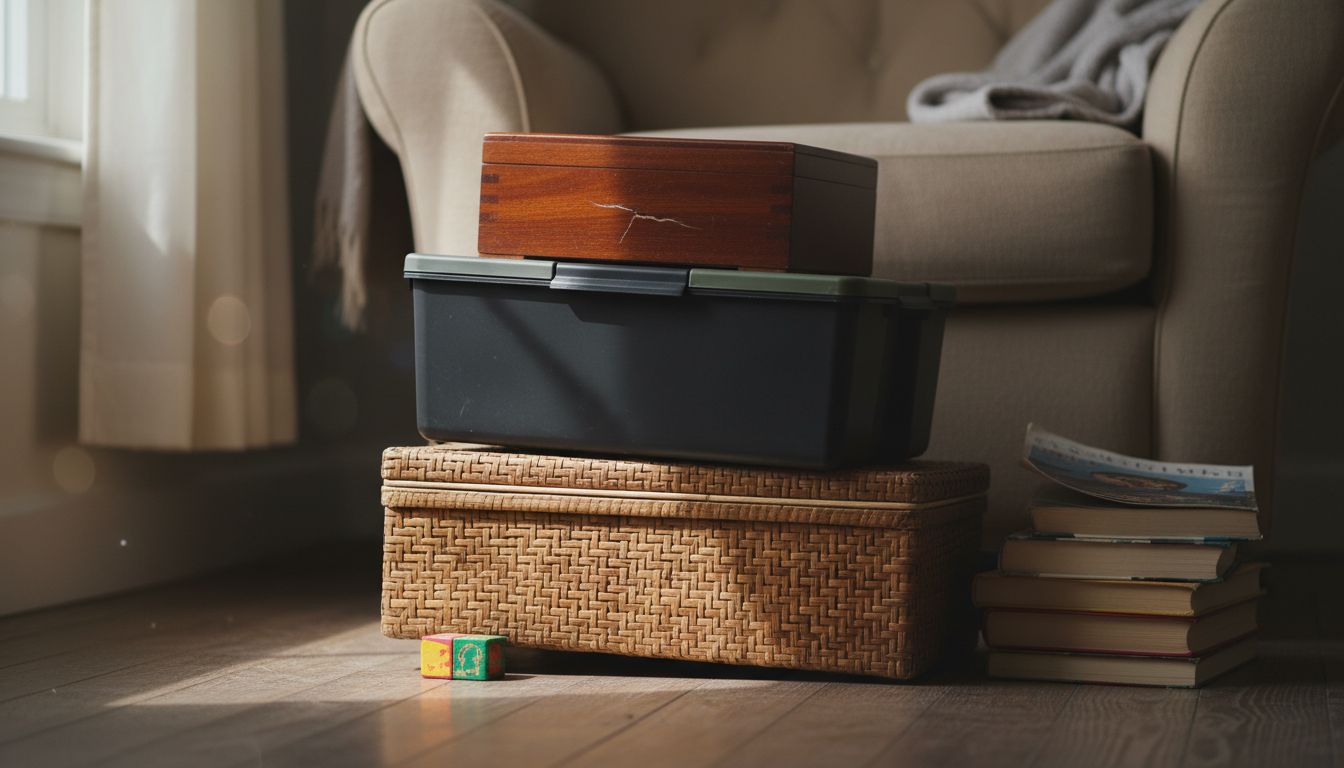
Ultimately, selecting the right storage box material is about balancing aesthetics with functionality. The most effective storage solutions seamlessly blend into your living room’s design language while providing efficient organization. Whether you prefer the rustic charm of wooden boxes, the sleek simplicity of metal containers, or the soft elegance of fabric storage, there’s a material option that can transform cluttered spaces into streamlined, visually appealing environments.
Smart Organization and Placement Strategies
Maximizing living room storage requires thoughtful planning and strategic placement of storage boxes. Vertical storage solutions can dramatically transform how homeowners utilize available space, turning previously unused areas into efficient organizational zones. Strategic placement is about more than just finding a spot for your storage boxes - it’s about creating a cohesive system that enhances both functionality and visual appeal.
Effective storage strategies begin with understanding spatial dynamics and accessibility. Effective storage principles emphasize the importance of maximizing both floor and wall areas while ensuring items remain easily accessible. Consider implementing multi-functional storage solutions like ottomans with hidden compartments, wall-mounted shelving units, and under-furniture storage boxes that blend seamlessly with your living room’s design. The key is creating storage systems that don’t disrupt the room’s aesthetic flow but instead enhance it.
When arranging storage boxes, consider creating designated zones for different categories of items. Group similar objects together - entertainment accessories in one box, reading materials in another, and decorative items in a third. This approach not only makes items easier to find but also helps maintain a sense of order. Pay attention to visual weight and balance, mixing larger storage containers with smaller ones to create visual interest. Opt for storage boxes that complement your existing furniture color palette and design style, transforming them from mere organizational tools into decorative elements that enhance your living room’s overall ambiance.
Ultimately, smart storage is about creating a system that adapts to your lifestyle. Regularly reassess your storage needs, rotating seasonal items and decluttering periodically. The most effective storage solutions are those that remain flexible, allowing you to adjust and modify your organizational approach as your living space and personal requirements evolve. By approaching storage boxes as dynamic design elements rather than static containers, you can create a living room that feels both organized and effortlessly stylish.
Choosing the Right Box for Your Needs
Selecting the perfect storage box for your living room requires careful consideration of multiple factors beyond simple aesthetics. Understanding storage bin types can help homeowners make informed decisions that balance functionality with design. Material selection plays a crucial role in determining a storage box’s performance, with each material offering unique advantages for different organizational needs.
Storage box selection principles emphasize evaluating specific environmental conditions and intended use. Plastic boxes excel in dusty or high-traffic areas due to their easy-clean surfaces, while fabric containers provide softer, more flexible storage solutions. Consider the specific items you plan to store - heavy books might require sturdy wooden boxes, whereas lightweight accessories could be perfectly contained in canvas or woven options. The box’s size, durability, and aesthetic compatibility with your living room’s design should all factor into your decision-making process.

Room-specific requirements demand tailored storage approaches. Living rooms often require versatile storage solutions that can accommodate diverse items like remote controls, magazines, throw blankets, and decorative accessories. Look for boxes with features like removable lids, handles for easy transportation, and neutral color palettes that integrate smoothly with existing furniture. Some storage boxes offer additional functionality, such as serving as extra seating or acting as decorative side tables, maximizing both organizational efficiency and spatial utility.
Ultimately, the right storage box is a personalized choice that reflects your unique lifestyle and design preferences. Consider your long-term organizational goals, potential future changes in your living space, and the ongoing maintenance requirements of different storage solutions. By approaching storage box selection as an investment in both functionality and style, you can transform cluttered spaces into streamlined, aesthetically pleasing environments that simplify your daily life and enhance your home’s overall visual appeal.
Common Mistakes and Safety Precautions
Storage box management in living rooms requires strategic planning and awareness of potential pitfalls that can compromise both organization and safety. Understanding bedroom storage strategies provides valuable insights that can be applied to living room storage solutions. Organizational errors can quickly transform storage from a helpful system into a source of frustration and potential household risks.
Common organizational mistakes often stem from failing to maximize available space and neglecting proper item categorization. Homeowners frequently overlook critical aspects like weight distribution, accessibility, and potential safety hazards. Overloading storage boxes can lead to structural damage, while improperly stacked containers create risks of toppling. Ensure each box has a weight limit and avoid placing heavy items in high locations where they might cause injury if they fall. Consider using reinforced boxes for heavier items and implement a systematic approach to stacking that prioritizes stability and ease of access.
Safety precautions extend beyond physical arrangement to include material considerations and environmental factors. Plastic storage boxes should be kept away from direct sunlight to prevent degradation, while fabric containers require protection from moisture and potential mildew. For homes with children or pets, consider storage boxes with secure lids and rounded edges to minimize accident risks. Implement a regular maintenance routine that includes checking for wear and tear, cleaning containers, and reorganizing contents to ensure ongoing functionality and safety. Pay special attention to boxes stored in high-traffic areas, ensuring they do not obstruct walkways or create tripping hazards.
Ultimately, effective storage is about creating a system that adapts to your lifestyle while maintaining safety and efficiency. Regularly reassess your storage solutions, being willing to modify your approach as your living space and personal needs change. By approaching storage boxes as dynamic organizational tools rather than static containers, you can create a living room environment that feels both secure and thoughtfully organized. The goal is to transform storage from a potential source of stress into a seamless, intuitive part of your home’s design.
Transform Your Living Room with Stylish Storage Boxes Today
Living rooms often become the center of daily activity and can easily fill with clutter making it difficult to maintain a neat and welcoming space. This article highlights how smart organization, choosing the right storage box materials, and thoughtful placement can dramatically improve your living area’s functionality and style. Whether you struggle with limited space or need solutions that blend seamlessly with your décor finding the perfect storage box that matches your needs is essential.
Discover a range of durable and elegant options at Bedroom Storage – BLUSHBEES USA designed for homes like yours.

Take control of your living room clutter by exploring storage boxes crafted to fit modern lifestyles. Visit https://blushbees.us now to find space-saving, attractive storage solutions that keep your home organized and beautiful. Don’t wait to create a living space that feels spacious safe and effortlessly stylish. Start transforming your home with practical storage today.
Frequently Asked Questions
What materials are commonly used for storage boxes in living rooms?
Storage boxes can be made from various materials including fabric, wood, plastic, and woven materials. Each offers unique benefits: fabric boxes provide flexibility, wooden boxes add warmth, while plastic containers ensure durability.
How can I maximize space with storage boxes in my living room?
Utilize vertical storage solutions, multi-functional furniture, and designate specific zones for similar items. This helps in optimizing both the visual appeal and the functionality of your living space.
What features should I look for when choosing a storage box for my living room?
Consider features like removable lids, handles for easy transport, size, shape, and color palettes that complement your existing decor. Durability and material maintenance requirements are also crucial factors.
How can I ensure the safety of storage boxes in my living room?
To maintain safety, avoid overloading boxes, ensure proper stacking, and choose secure lids and rounded edges for boxes. Regular maintenance, including checking for wear and adjusting placements, is essential to prevent hazards.
Recommended
- Expert-Approved Small Space Storage Tips And Products – BLUSHBEES USA
- Top Under Bed Storage Hacks for Stylish Homes in 2025 – BLUSHBEES USA
- Maximize Space and Declutter with Collapsible Storage Boxes: The Ultim – BLUSHBEES USA
- Bedroom Storage tips the Pros use – BLUSHBEES USA
- 7 Smart Living Room Design Inspiration Ideas for All Spaces - Projector Display

