

Over 60 percent of American women living in cities admit their closets feel cluttered most days. Managing clothing storage while keeping a stylish home can be challenging with limited space and hectic schedules. Clothes organizer bins offer functional solutions that blend practicality and design, making closet decluttering simpler and more visually appealing. This guide spotlights the best systems and tips to help busy women transform wardrobe chaos into organized, elegant spaces.
Table of Contents
- Defining Clothes Organizer Bins And Uses
- Types Of Organizer Bins For Clothing
- Key Features For Efficient Organization
- Smart Placement And Usage Tips
- Costs, Value, And Common Mistakes
Key Takeaways
| Point | Details |
|---|---|
| Storage Solutions | Clothes organizer bins help maximize space and streamline the organization of wardrobes by providing versatile and accessible storage options. |
| Types of Bins | Different materials and designs cater to specific storage needs, including moisture-resistant plastic, breathable fabric, and stackable options. |
| Key Features | Look for durability, portability, and protective features in bins to enhance closet organization efficiency while maintaining garment quality. |
| Common Mistakes | Avoid storing unwashed clothes and overcrowding bins, as these practices can lead to damage and reduced organization effectiveness. |
Defining Clothes Organizer Bins and Uses
Clothes organizer bins are versatile storage solutions designed to transform closet management and streamline wardrobe organization. These specialized containers provide an intelligent approach to storing and accessing clothing items efficiently, addressing the common challenges of limited closet space and cluttered wardrobes.
Organizer bins come in various shapes, sizes, and materials, each engineered to solve specific storage needs. Clothes storage systems that facilitate easy visibility and access enable individuals to maximize their closet potential. Typically constructed from durable materials like canvas, plastic, or woven fabric, these bins offer lightweight yet robust storage options for different clothing types.
The primary uses of clothes organizer bins extend beyond simple storage. They serve multiple functions that make wardrobe management more intuitive:
- Sorting clothes by category (workout gear, casual wear, formal attire)
- Creating visual separation between different clothing types
- Preventing wrinkles and maintaining garment quality
- Maximizing vertical closet space
- Enabling quick outfit selection
Unlike traditional storage methods, modern organizer bins are designed with user convenience in mind. Many feature handles for easy transportation, clear labeling areas, and stackable configurations that adapt to changing storage requirements. This flexibility makes them an essential tool for anyone seeking to create a more organized and accessible wardrobe.
Pro tip: Select clothes organizer bins with breathable materials to prevent moisture buildup and maintain fabric freshness.
Types of Organizer Bins for Clothing
Clothing organizer bins represent a diverse ecosystem of storage solutions, each designed to address specific wardrobe management challenges. Storage containers vary widely in material, functionality, and design, offering options that cater to different organizational needs and aesthetic preferences.
The primary categories of clothing organizer bins include:
- Hard Plastic Bins: Durable and moisture-resistant, ideal for protecting clothes from environmental damage
- Fabric Storage Bins: Soft, breathable containers that blend seamlessly with home decor
- Stackable Storage Totes: Modular solutions that maximize vertical space in closets and storage areas
- Under-Bed Storage Containers: Space-efficient options that utilize often overlooked storage areas
- Vacuum-Sealed Bags: Compression storage for seasonal or rarely used clothing items
Professional organizers recommend selecting bins based on specific storage requirements, taking into account factors like material opacity, durability, and intended clothing type. Some bins feature innovative design elements such as clear panels for easy visibility, reinforced walls for heavier loads, and collapsible structures for convenient storage when not in use.
The material composition plays a crucial role in bin selection. Canvas bins offer breathability and a soft aesthetic, while plastic containers provide maximum protection against moisture and dust. Woven natural fiber options like rattan or seagrass can add a decorative touch to storage solutions, making organization both functional and visually appealing.
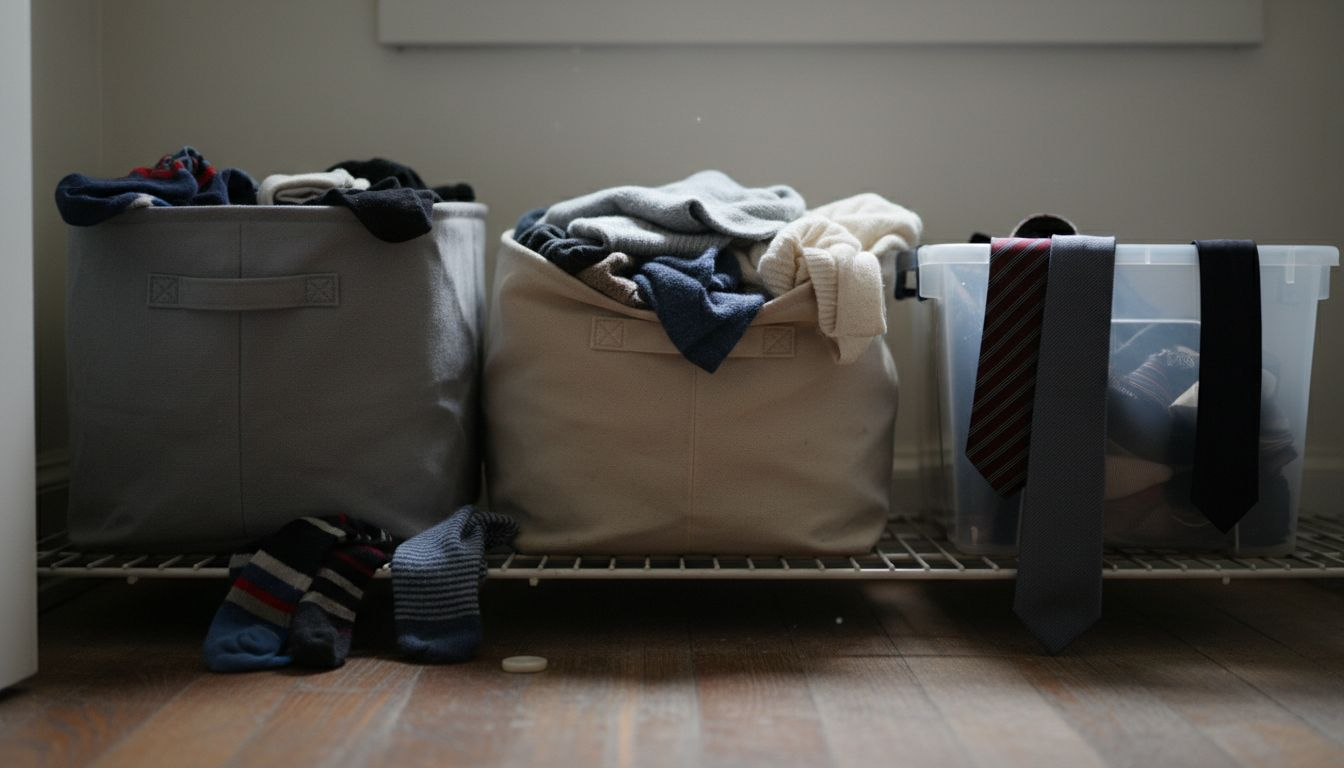
Here’s a quick comparison of popular clothes organizer bin types and their key advantages:
| Bin Type | Ideal For | Unique Benefit | Typical Material |
|---|---|---|---|
| Hard Plastic Bins | Long-term storage | Moisture barrier | Polypropylene plastic |
| Fabric Storage Bins | Everyday access | Decorative appeal | Cotton or canvas |
| Stackable Storage Totes | Small closets | Modular vertical storage | Plastic or woven fabric |
| Under-Bed Containers | Off-season clothes | Hidden storage solution | Rigid plastic or fabric |
| Vacuum-Sealed Bags | Rarely used items | Space-saving compression | Heavy-duty plastic |
Pro tip: Choose organizer bins with multiple features, such as reinforced handles and stackable designs, to create a versatile and adaptable clothing storage system.
Key Features for Efficient Organization
Clothes organizer bins require strategic design elements to truly transform closet management and enhance storage efficiency. Key organizational features go beyond simple container functionality, incorporating multiple aspects that address practical storage challenges.
The most critical features for efficient organization include:
- Durability: Ability to withstand frequent handling and heavy clothing loads
- Portability: Integrated handles for easy transportation and repositioning
- Stackability: Modular design that maximizes vertical storage space
- Protective Features: Secure lids preventing dust, moisture, and pest intrusion
- Material Adaptability: Options that suit different environmental conditions
Professional storage experts recommend selecting bins that balance practicality with visual appeal. Transparent containers allow quick item identification, while opaque designs reduce visual clutter. The ideal bin should be lightweight, cost-effective when purchased in sets, and sized appropriately to prevent unnecessary overcrowding.
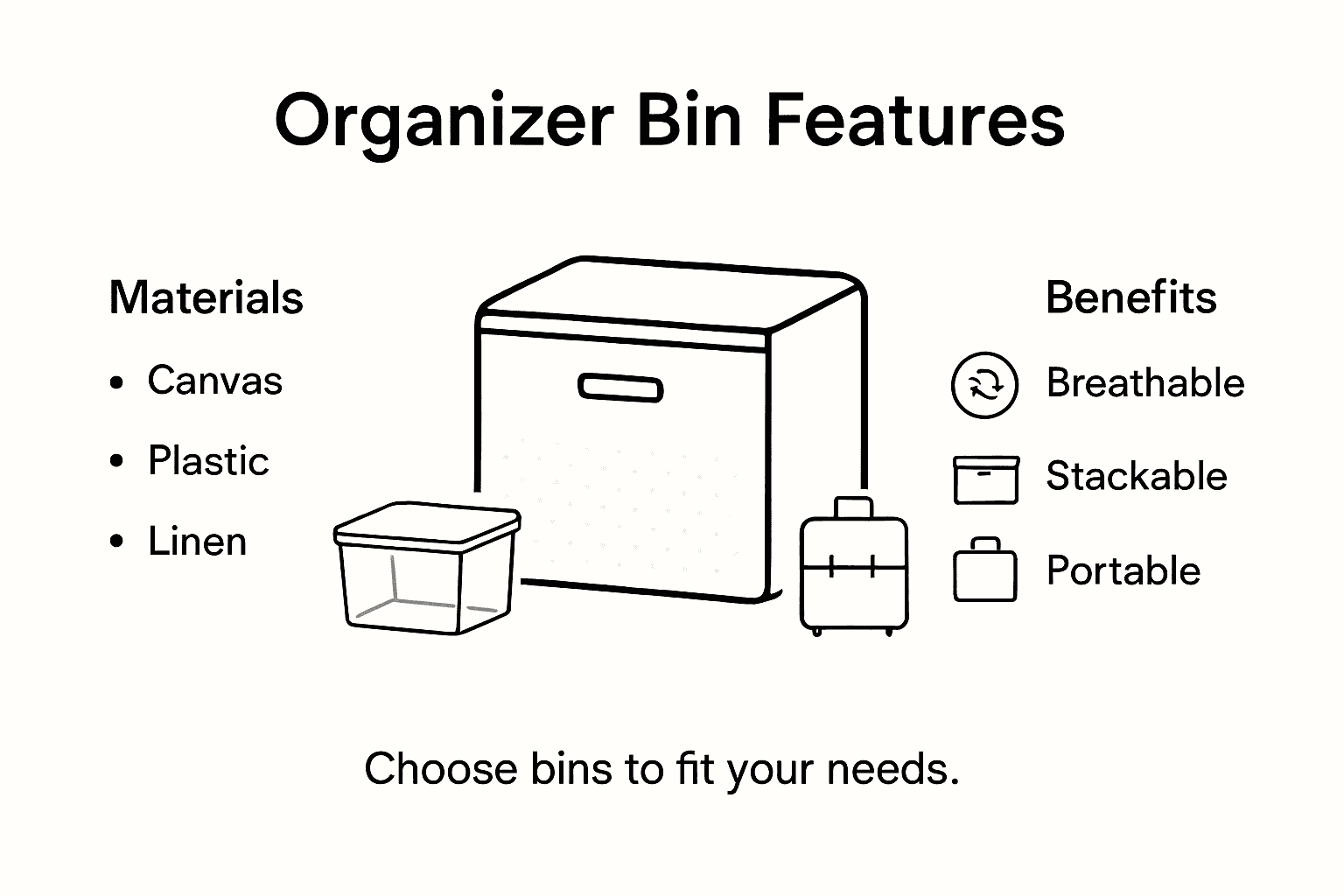
Material selection plays a crucial role in organizational efficiency. Breathable fabrics prevent moisture buildup in clothing storage, while hard plastics offer maximum protection. Some advanced bins feature innovative design elements like reinforced walls, collapsible structures, and integrated labeling systems that further enhance their organizational potential.
Pro tip: Invest in storage bins with multiple organizational features, prioritizing versatility and adaptability to accommodate changing wardrobe needs.
Smart Placement and Usage Tips
Closet organization requires strategic thinking and intentional placement of clothes organizer bins. Effective storage solutions depend on careful categorization and accessibility, transforming chaotic wardrobes into streamlined spaces that simplify daily dressing routines.
Key strategies for smart bin placement include:
- Categorize clothing by frequency of use
- Everyday items: Front and center, easily accessible
- Seasonal clothing: Upper shelves or back of closet
- Rarely worn pieces: Lower or less convenient storage areas
- Utilize vertical space efficiently
- Create logical groupings by type (workout gear, formal wear, casual clothing)
Maximizing limited storage space requires creative folding and organizational techniques, such as rolling clothes instead of traditional folding. This approach not only saves space but also increases visibility and prevents wrinkles. Incorporating simple dividers within bins helps separate smaller accessories like belts, socks, and underwear, creating a more structured storage system.
Consider the specific characteristics of your storage area when selecting and positioning bins. Lightweight, portable containers with handles work best for frequently moved items, while sturdy, stackable bins are ideal for static closet spaces. Matching bin sizes to existing storage cubbies and shelving maximizes every inch of available space, creating a cohesive and efficient organizational system.
Pro tip: Create a seasonal rotation system using labeled bins to easily swap out clothing and maintain a clutter-free, organized wardrobe.
Costs, Value, and Common Mistakes
Clothes organizer bins represent an investment in home organization, with pricing and quality varying significantly across different models and materials. Costs range widely depending on specific design features and storage capabilities, making it crucial for consumers to understand the relationship between price and value.
Bin pricing typically breaks down into several categories:
-
Budget Bins: $5-$15
- Fabric or lightweight plastic
- Basic functionality
- Limited durability
-
Mid-Range Bins: $15-$40
- Enhanced materials
- Better construction
- More organizational features
-
Premium Bins: $40-$100
- High-end materials
- Advanced design
- Maximum durability and functionality
Preventing common storage mistakes is essential for protecting clothing and maintaining organizational systems. Critical errors include storing unwashed clothing, which attracts pests and creates potential mildew, using inappropriate containers that trap moisture, and exposing bins to direct sunlight that can fade fabrics. Proper preparation involves cleaning clothes thoroughly, sorting by weight and type, and selecting breathable storage options that protect garment integrity.
Value assessment goes beyond initial cost, encompassing durability, protective features, and how effectively the bins integrate into existing storage systems. Consumers should prioritize bins with clear visibility, robust construction, and adaptable design that can evolve with changing wardrobe needs. Investing in high-quality storage solutions ultimately saves money by protecting clothing and reducing the frequency of replacements.
Below is a summary of common mistakes and how to avoid them when using clothes organizer bins:
| Mistake | Consequence | Prevention Tip |
|---|---|---|
| Storing unwashed clothes | Attracts pests, mildew forms | Clean garments before storing |
| Using airtight bins for damp items | Traps moisture, causes odor | Ensure fabrics are dry |
| Direct sunlight exposure | Fading and fabric damage | Store bins in shaded locations |
| Overcrowding bins | Wrinkling, reduced visibility | Match bin size to clothing load |
Pro tip: Invest in a mix of bin types and sizes to create a flexible, adaptable storage system that can grow with your wardrobe.
Transform Your Closet with Stylish and Practical Organizer Bins
Tired of cluttered closets and hard-to-find clothes The article highlights the challenge of limited closet space and the need for versatile, breathable, and stackable clothes organizer bins to keep your wardrobe neat and accessible. Achieve your goal of a wrinkle-free, well-sorted closet by choosing containers designed to protect your fabrics while maximizing space.
Discover a curated selection of durable and beautiful storage solutions at Closet Storage – BLUSHBEES USA that address these specific concerns. Whether you want stackable storage totes or fabric bins with reinforced handles you can find options that blend function with home decor appeal.

Elevate your bedroom’s organization by exploring Bedroom Storage – BLUSHBEES USA for complementary solutions that create harmony throughout your space. Don’t wait until clutter overtakes your closet Create an organized, stylish environment now with practical bins available at Blushbees that adapt easily to your seasonal rotation and everyday needs. Shop today and experience the ease of a neat and fresh wardrobe.
Frequently Asked Questions
What are clothes organizer bins?
Clothes organizer bins are versatile storage solutions designed to help manage and organize clothing efficiently, addressing issues like limited closet space and clutter.
What types of materials are clothes organizer bins made from?
Clothes organizer bins can be made from various materials, including hard plastic for durability, fabric for breathability, woven natural fibers for decorative appeal, and vacuum-sealed bags for space-saving compression.
How should I categorize clothing when using organizer bins?
Categorizing clothing by frequency of use is key: place everyday items within easy reach, seasonal clothing on upper shelves, and rarely worn pieces in less accessible areas to optimize your wardrobe layout.
What are some common mistakes to avoid when using clothes organizer bins?
Common mistakes include storing unwashed clothing, using inappropriate containers that trap moisture, exposing bins to direct sunlight, and overcrowding bins, which can lead to wrinkling and reduced visibility.

